
Ross Tree likes to keep its customers informed about invasive tree insects. Local media outlets have featured stories about the Spotted Lanternfly for years. It has not been confirmed in Colorado, but this insect has created havoc in Pennsylvania, New York, Maryland, Delaware, and Virginia. The Japanese Beetle and the Emerald Ash Borer, recent insect transplants, are now notorious in Denver. Let’s hope the Lanternfly does not make its way to Colorado and join their ranks
Spotted Lanternfly in Colorado: Current Status
As of the latest update from CSU Extension (August 2025), the spotted lanternfly had not been detected in Colorado, and state agencies were still monitoring for it. It has been found in a growing list of Eastern states since its 2014 arrival in Pennsylvania. Because status can change, check CSU Extension or the Colorado Department of Agriculture before assuming Colorado is still clear.
What to Look For
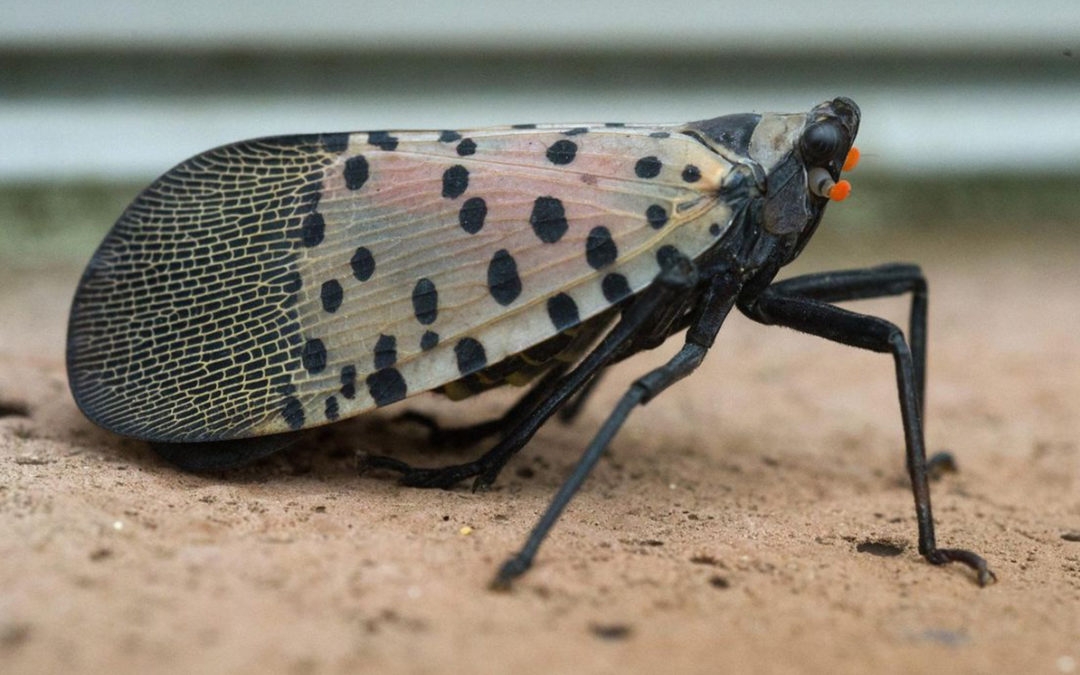
Early nymphs are black with white spots, late nymphs turn red, and adults are about an inch long with gray, black-spotted wings and a red underwing. Egg masses look like gray, mud-like patches on trees, vehicles, and outdoor equipment. Adults favor Tree of Heaven and black walnut. If you have an Ailanthus, read our post on the Tree of Heaven.
If You Find One
Take a photo, and report it to your county CSU Extension office or the Colorado Department of Agriculture at 303-869-9000. If you move to Colorado from the East, check campers, bikes, and outdoor furniture for egg masses before unloading. For help with a tree you are worried about, request an arborist visit.
The Spotted Lanternfly

The sap-sucking Spotted Lanternfly is indigenous to Asia and attacks over seventy woody and non-woody plants, including grapes, hops, fruit, ornamental, and hardwood trees. In 2014, this planthopper made its presence known in the Philadelphia area. The 5280 Magazine is not known for its articles on Entomology, but in August 2018, it published an article titled “This Invasive Insect Has Local Tree Huggers Worried.” Channel 9 News followed up with a story a year later showing trees covered with hundreds if not thousands of these bugs in Pennsylvania. The onslaught is so bad in Philadelphia that the police department asked people not to call the police when the planthopper appears in their yards. Pennsylvanians started writing songs and posting ingenious ways of dispatching this pest on social media.

The Spotted Lanternfly bores into trees causing sap oozing, wilting, leaf curling, and dieback. The insects excrete honeydew that grows black sooty mold. Overtime this mold weakens trees. On top of this, yards and neighborhoods with large infestations find these bugs a significant nuisance. The insect lays eggs on vehicles, campers, boats, yard furniture, and farm equipment. With the migration of people from the Eastern United States to Colorado with all their outdoor belongings and vehicles, it is just a matter of time before the Lanternfly arrives in Colorado.
Local Colorado vineyard, fruit and lumber industries could be devastated since there are no native predators to keep this insect in check. Let’s hope the scientists at the Colorado State University and the Colorado Department of Agriculture are looking for ways to control the Spotted Lanternfly before it arrives. The State of Pennsylvania has been dealing with this insect invasion the longest. Click here to visit the Pennsylvania Department of Agriculture’s Lanternfly webpage.
Recent Comments